


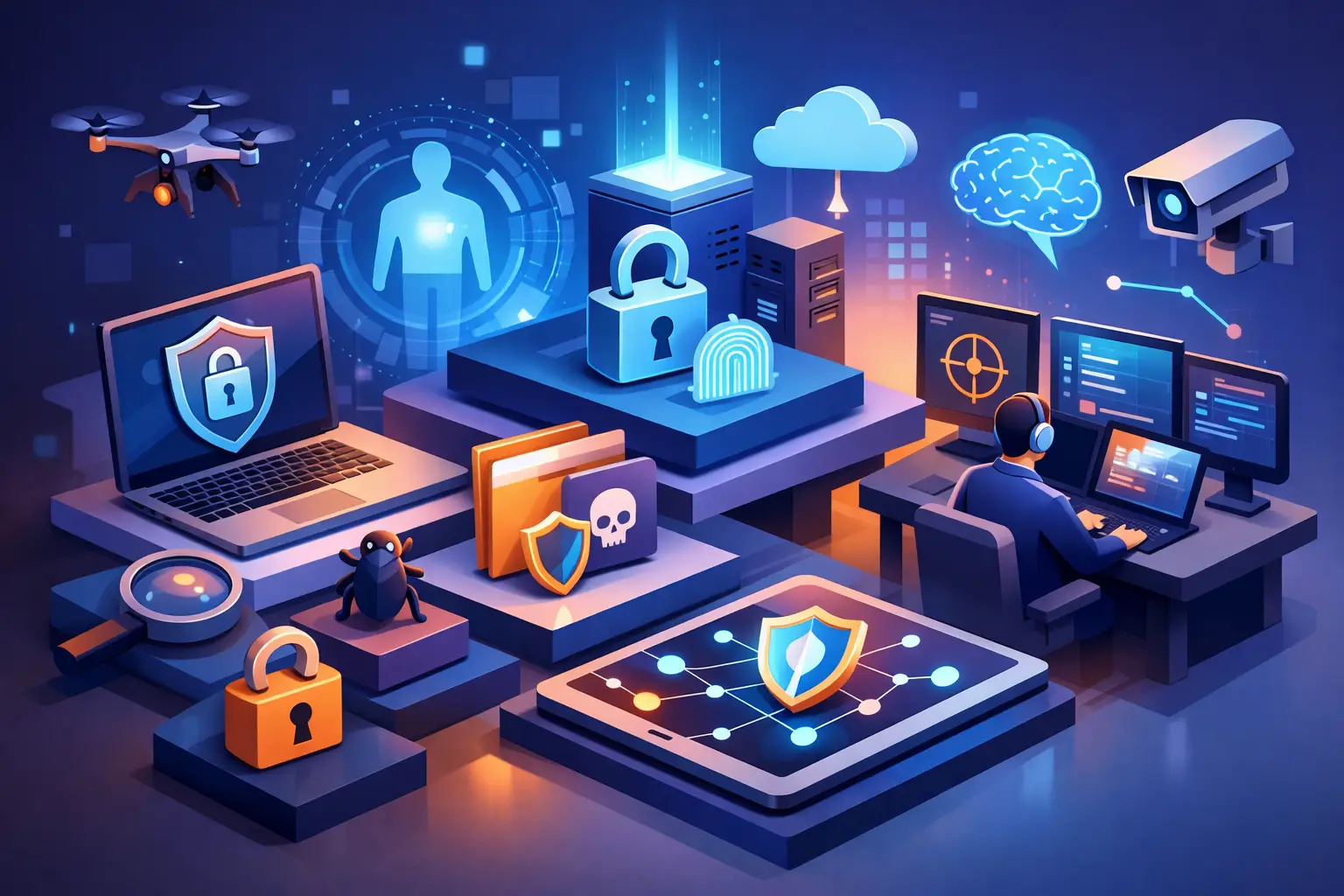
10 Best Cybersecurity Training Topics 2026
A single stolen credential can turn a routine workday into a ransomware event, a data breach, or a reportable regulatory incident. That is why the best cybersecurity training topics 2026 cannot be selected from a generic awareness checklist. Organizations need training that reflects how attacks are actually reaching employees, how work is changing through AI and cloud platforms, and what regulators expect leaders to prove.
Cybersecurity starts with people - not tools. A well-configured security stack still depends on someone recognizing a suspicious request, handling sensitive information correctly, and escalating concerns before damage spreads. The strongest programs connect daily employee decisions to business risk, compliance duties, and measurable behavior change.
What makes a training topic a priority in 2026?
The right topics depend on your sector, operating regions, technology environment, and threat exposure. A financial services firm may need deeper instruction on payment fraud and data handling. A manufacturer may prioritize operational technology access and supplier risk. Organizations in scope for NIS2 need training that supports governance, incident reporting, and cyber hygiene obligations.
Still, every topic should pass three tests. It should address a realistic attack path, apply to the learner's actual role, and produce an observable outcome, such as faster reporting, fewer risky clicks, or better handling of confidential data. If training cannot change a decision someone makes at work, it is unlikely to reduce risk.
The 10 best cybersecurity training topics 2026
1. Phishing, business email compromise, and impersonation
Phishing remains the entry point for credential theft, malware, invoice fraud, and account takeover. In 2026, employees must recognize more than poorly written emails. They need to challenge believable messages that imitate executives, vendors, HR teams, banks, and collaboration platforms.
Training should cover urgent payment requests, altered bank details, QR-code phishing, malicious calendar invitations, and impersonation through text, chat, and social media. Most importantly, teach a clear reporting process. Employees should know how to pause, verify through a trusted channel, and report without fearing blame for raising a false alarm.
2. AI-enabled scams and safe use of generative AI
AI has improved both productivity and deception. Deepfake voice calls can imitate a senior leader. AI-written phishing messages are more polished and more targeted. Employees may also paste sensitive company information into public AI tools without understanding where that data goes.
This topic needs a balanced approach. Banning AI without practical alternatives encourages shadow use. Instead, establish clear rules for approved tools, permitted data, verification of AI-generated output, and escalation when a request seems unusual. Leaders should also understand the fraud implications of synthetic media and the controls required for high-risk approvals.
3. Password security, MFA, and credential theft
Passwords are no longer enough, but password training still matters because stolen credentials remain highly valuable to attackers. Employees need to understand why password reuse is dangerous, how password managers reduce risk, and why multifactor authentication prompts must never be approved blindly.
Include MFA fatigue attacks, where attackers repeatedly trigger login prompts until a user accepts one, and adversary-in-the-middle phishing sites that capture session tokens. The practical lesson is simple: never share credentials or codes, never approve an unexpected prompt, and report unusual authentication activity immediately.
4. Ransomware readiness and incident reporting
Ransomware is not only an IT problem. It often begins with a human action: opening a malicious attachment, disclosing credentials, or connecting an unmanaged device. Every employee should understand the early signs of compromise, including unexpected file encryption, suspicious pop-ups, locked accounts, or activity they did not initiate.
Training must make the first response unambiguous. Disconnect from networks if directed by policy, stop interacting with the suspected system, and report immediately through defined channels. Do not ask staff to investigate on their own. Speed matters, and delayed reporting can turn a contained incident into a business-wide outage.
5. Data protection and secure information handling
Employees handle sensitive data across email, cloud storage, file-sharing tools, mobile devices, and third-party platforms. Training should define what information is sensitive, where it may be stored, who may access it, and how it should be shared or disposed of.
Avoid vague instructions such as “be careful with data.” Use role-specific examples. A finance employee may need to protect banking details and payroll records. HR teams handle employee data. Sales teams may expose customer contracts through an incorrectly shared folder. The goal is to make correct data handling the easiest choice in everyday workflows.
6. Cloud collaboration and SaaS security
Modern work happens in shared drives, project platforms, messaging tools, and SaaS applications. Misconfigured sharing permissions and unauthorized integrations can expose data without a traditional breach. This is especially relevant for hybrid organizations that collaborate across departments, contractors, and borders.
Training should cover access permissions, external sharing, secure use of personal devices, and the risks of approving unfamiliar app integrations. Employees do not need a cloud architecture lesson. They need to know when a public link is inappropriate, why least-privilege access matters, and where to request support before sharing sensitive material.
7. Secure remote work and mobile device safety
Remote and mobile work expands the attack surface beyond the office. Public Wi-Fi, lost devices, unapproved file transfers, and personal communication channels all create opportunities for data loss and account compromise.
The most effective training focuses on realistic decisions: locking screens, protecting devices in transit, using approved connections, updating software, and avoiding work on sensitive documents in exposed environments. For organizations with field teams, travel-heavy roles, or bring-your-own-device policies, this topic should be tailored to the conditions employees actually face.
8. Third-party risk and vendor fraud
Attackers increasingly exploit trust between organizations and their suppliers. A compromised vendor email account can send a convincing invoice, request a change in payment details, or distribute malicious files. Procurement, finance, legal, and operations teams often face the highest exposure, but every employee can receive a vendor-related request.
Train staff to verify changes to payment instructions through known contacts, scrutinize unexpected attachments, and follow approved onboarding processes for new vendors and software. This is one area where a generic annual course is not enough. High-risk teams need scenario-based practice built around their approval responsibilities.
9. NIS2, regulatory accountability, and cyber governance
For organizations affected by NIS2 or working within regulated supply chains, cybersecurity awareness must support more than good habits. It must reinforce accountability, risk management, incident escalation, and evidence that training has been delivered effectively.
Executives and managers need targeted education as well. Board-level oversight, resource decisions, and incident readiness cannot be delegated entirely to technical teams. Training for leadership should translate cyber risk into operational impact: downtime, legal exposure, customer trust, supply-chain disruption, and financial loss.
10. Insider risk and security culture
Not every security incident involves malicious intent. Employees can create risk through workarounds, accidental sharing, poor access hygiene, or failure to report a mistake quickly. A culture based solely on punishment makes these problems harder to detect because people hide them.
Teach accountability without creating fear. Employees should understand that reporting a lost device, misdirected email, or suspicious action early is a security success, not a personal failure. Managers must reinforce that message through their actions, especially during real incidents.
Turn topics into a training program that changes behavior
Covering these subjects once a year will not prepare people for changing attack methods. Build a training cadence that combines onboarding education, short recurring modules, targeted campaigns after emerging threats, and role-based assignments for high-risk groups. Interactive exercises, phishing simulations, knowledge checks, and certifications create stronger evidence of engagement than passive slide presentations.
Measurement should go beyond completion rates. Track reporting volume and quality, phishing simulation results, repeat-risk patterns, time to complete training, and performance by role or location. More reports may initially indicate a healthier security culture, not a worse one. The key is to look for faster escalation, better decisions, and reduced exposure over time.
CISO EDU helps organizations align practical workforce education with regional requirements, role-based risk, and leadership accountability. The objective is not to turn every employee into a security analyst. It is to give every employee the confidence to recognize risk and take the right next step.
The most valuable training topic is the one that prevents the next avoidable mistake. Start with the behaviors your organization cannot afford to get wrong, make the response expected of employees clear, and keep practicing until secure decisions become routine.
FAQ
1. What is the most important cybersecurity training topic for employees in 2026?
Phishing awareness remains the highest-priority cybersecurity training topic in 2026 because phishing attacks continue to be the most common entry point for credential theft, ransomware, business email compromise, and data breaches. Employees should learn how to identify suspicious emails, messages, QR codes, and impersonation attempts, as well as how to report them quickly.
2. Why is AI security awareness becoming essential in cybersecurity training?
Artificial intelligence is increasingly used by cybercriminals to create convincing phishing emails, deepfake audio, fake identities, and social engineering attacks. Employees need training on recognizing AI-enabled scams, safely using generative AI tools, and protecting sensitive corporate information from unauthorized disclosure.
3. How does NIS2 affect employee cybersecurity training?
NIS2 requires organizations in scope to strengthen cybersecurity governance, risk management, incident reporting, and cyber hygiene practices. Employee training plays a critical role in demonstrating compliance by ensuring staff understand their responsibilities, recognize security risks, and follow established reporting procedures.
4. How often should cybersecurity awareness training be conducted?
Organizations should move beyond annual awareness sessions and adopt a continuous training approach. Best practice includes onboarding training, quarterly awareness campaigns, monthly microlearning modules, phishing simulations, and targeted training for high-risk roles such as finance, procurement, HR, and executives.
5. How can organizations measure the effectiveness of cybersecurity training?
Training effectiveness should be measured using behavioral and risk-based metrics rather than completion rates alone. Key indicators include phishing simulation performance, incident reporting rates, time-to-report, reduction in risky behavior, employee assessment scores, and overall improvements in security culture and cyber resilience.

Written By
Yavor Y. Zlatev
CEO & Executive Director at Advanced Vision IT
Yavor leads strategic growth and technology operations at Advanced Vision IT, specializing in enterprise cybersecurity, cloud infrastructure, NIS2 compliance, and managed security service delivery. Find out more about me