


NIS2 - Cybersecurity Finance Industry - Advanced (Monthly Subscription)
COURSE DESCRIPTION
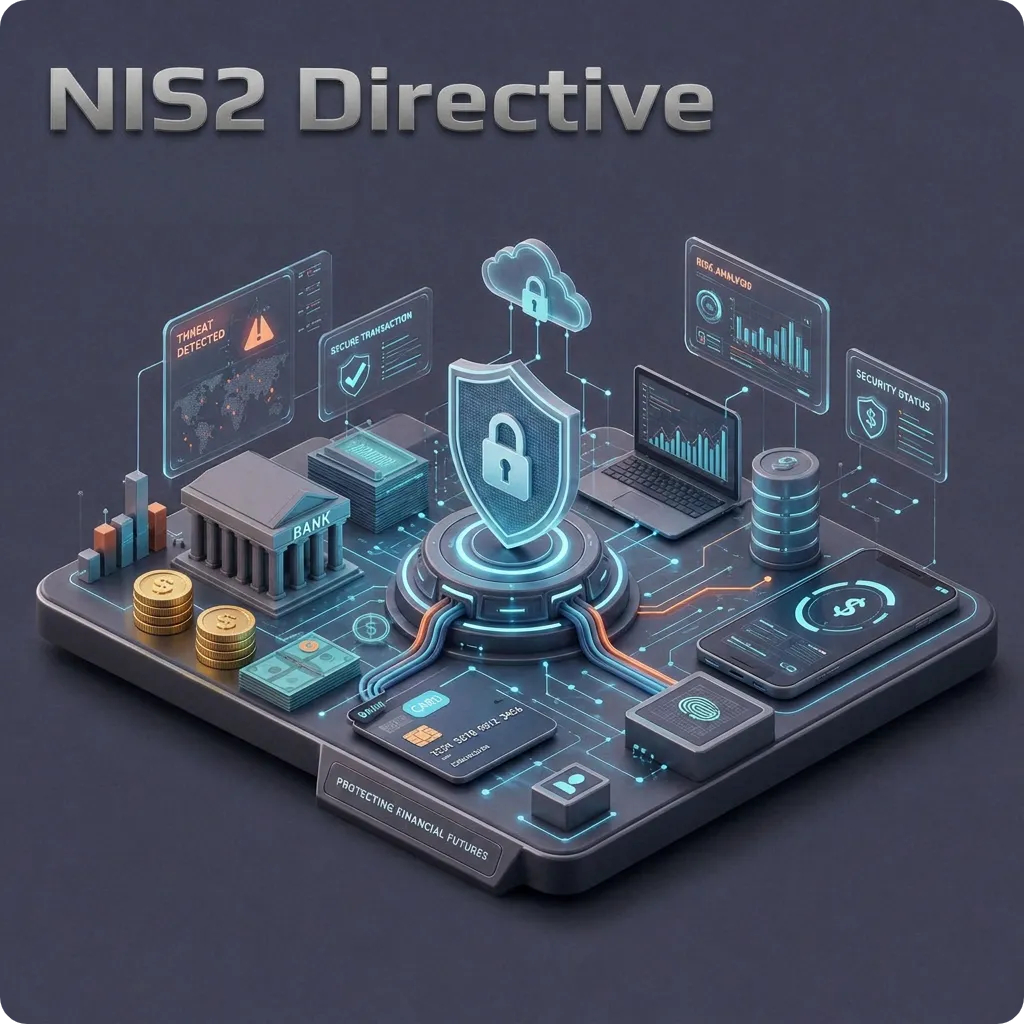
Financial organizations already understand that cybersecurity is a critical component of protecting data, maintaining customer trust, and ensuring service continuity. The real challenge begins when the requirements of the NIS2 Directive must be implemented across highly interconnected financial environments, where resilience, trust, and operational continuity are essential to business success.
Modern banks, fintech companies, payment institutions, insurance providers, investment firms, and financial service organizations operate within complex ecosystems powered by cloud services, digital banking platforms, APIs, real-time payment systems, third-party integrations, and managed service providers. These environments require much more than cybersecurity awareness. They demand structured processes, risk management, cross-functional coordination, and the ability to maintain operational resilience during cyber incidents.
This advanced-level course builds upon foundational cybersecurity and NIS2 knowledge and prepares participants to implement practical cybersecurity measures within the financial sector. The training focuses on risk management, protection of digital financial services, incident response, third-party risk management, business continuity, and long-term cyber resilience.
The course was developed by the CISO Edu team, the cybersecurity training platform of Advanced Vision IT. The company has 15 years of industry experience, is certified to ISO 27001, ISO 9001 and ISO 20000-1 standards, and is an AWS Cloud Certified Partner with certifications from leading cybersecurity vendors, including Sophos, Acronis, and other industry-leading technology providers. The content has been created by specialists who work daily with NIS2 compliance, industrial control systems (ICS), and critical infrastructure environments.
What Participants Will Learn
- ✓How to identify and prevent advanced phishing attacks and social engineering techniques targeting financial organizations.
- ✓How to protect sensitive customer information, financial data, and critical business processes.
- ✓How to manage endpoint security, vulnerability management, and patching processes in complex financial environments.
- ✓How to apply security best practices to cloud services, SaaS platforms, and financial applications.
- ✓How to detect, escalate, and manage cybersecurity incidents through structured response and reporting procedures.
- ✓How to assess and manage cyber risks within digital financial ecosystems and interconnected services.
- ✓How to identify and mitigate risks associated with vendors, third-party providers, and supply chain dependencies.
- ✓How to develop business continuity and disaster recovery capabilities for critical financial services.
- ✓How to secure interconnected IT environments, financial platforms, and business-critical systems.
- ✓How to strengthen organizational resilience and maintain essential services during cyber incidents.
ideal For
Course Modules
What You Gain at the Advanced Level
At this stage, the focus shifts toward:
Organizations gain:
- ✓A deeper understanding of operational cyber risk.
- ✓Improved visibility across digital systems, services, and dependencies.
- ✓Stronger coordination between business, IT, risk, and compliance teams.
- ✓A clearer roadmap for cybersecurity improvement and NIS2 implementation.
Business Impact
Organizations at this level are better positioned to:
- ✓Reduce the risk of disruption to critical financial services.
- ✓Improve operational resilience and business continuity.
- ✓Enhance incident response readiness.
- ✓Strengthen trust with customers, partners, and regulators.
- ✓Prepare for future regulatory and audit requirements.
In the financial sector, cyber resilience and customer trust are increasingly becoming key competitive advantages.
Next Step: From Operational Readiness to Strategic Leadership
The expert-level course expands on these foundations through advanced topics such as threat modeling, Zero Trust architectures, digital forensics, security architecture reviews, cybersecurity governance, regulatory compliance, crisis management, strategic risk management, and the development of long-term cyber resilience programs for financial institutions and fintech organizations.
Next Level