


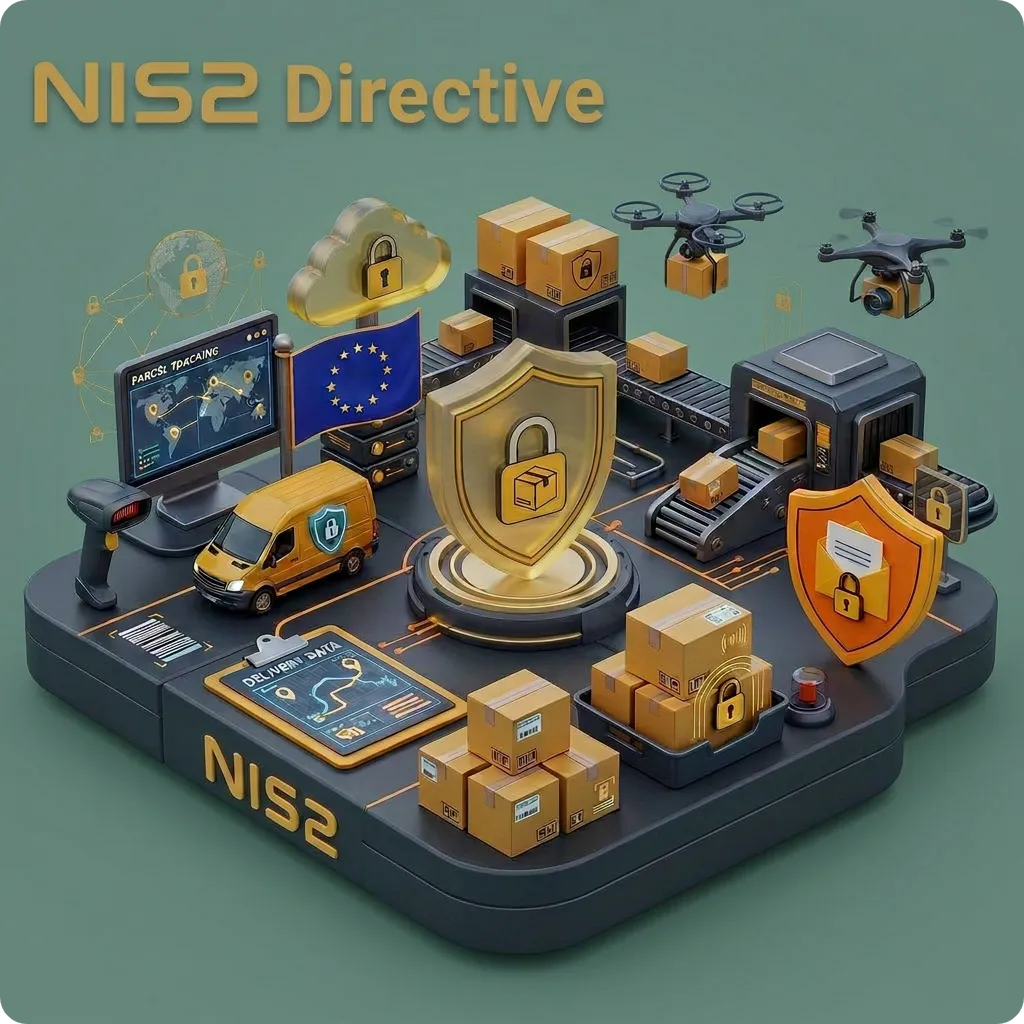
NIS2 – Cybersecurity in the Postal and Courier Services Industry – Beginner
COURSE DESCRIPTION
Postal and courier services run on connected systems: parcel tracking platforms used by customers and staff, automated sorting facilities controlled by networked software, handheld barcode and QR scanners and mobile devices that drivers use for routing and proof of delivery, POS terminals at post office counters, customs declaration systems and e-commerce integrations that connect retailers to the delivery network. Parcels have to keep moving, so attackers count on staff acting quickly under pressure, and customer names, addresses and payment data are valuable to criminals. A single fake delivery notice, customs fee demand or scanner "firmware update" can hand attackers credentials or malware that halts sorting, exposes customer data and damages public trust.
This entry-level course builds cybersecurity awareness for everyone who works in postal and courier services, from counter staff, sorting operators and delivery drivers to dispatchers, office teams and managers. No technical background is needed. Using realistic scenarios from post offices, sorting facilities and delivery routes, it shows how attacks start, how everyday habits stop them, and why NIS2, GDPR, PCI DSS and Universal Postal Union (UPU) standards make cybersecurity part of every employee's job.
The course was developed by the CISO Edu team – the cybersecurity training platform of Advanced Vision IT. The company has 15 years of experience in the industry, is certified to ISO 27001, ISO 9001 and ISO 20000-1, and is an AWS Cloud Certified Partner, as well as a partner holding multiple certifications from leading cybersecurity solution vendors, including Sophos, Acronis and other established technology companies. The content was developed by specialists who work daily with NIS2 compliance requirements, industrial control systems (ICS) and critical infrastructure environments.
What participants will learn
- ✓Explain what cybersecurity means in postal and courier operations and why tracking platforms, sorting facilities, delivery fleets and customer data make the sector a target.
- ✓Recognize phishing, smishing, vishing and quishing aimed at postal staff, such as fake shipment notifications, customs fee scams, "route update" text messages, fake scanner firmware updates and malicious QR codes on parcels, and report them correctly.
- ✓Identify how malware reaches workstations, POS terminals and handheld scanners through email attachments, malicious links, USB devices, fake updates and unsecured Wi-Fi, and respond correctly to a suspected infection.
- ✓Use strong passwords, password managers and multi-factor authentication, and avoid common mistakes such as shared scanner logins, generic POS credentials and approving MFA prompts you did not start.
- ✓Protect POS terminals, scanners, driver devices and laptops in post offices, sorting facilities and delivery vehicles, follow clean desk and visitor rules, and work safely on public Wi-Fi and from home.
- ✓Explain how a cyber incident turns into financial, legal and reputational damage for a postal or courier operator, and how business email compromise targets payments to vendors, e-commerce partners and customs brokers.
- ✓Describe, at awareness level, board accountability, tone from the top and the main obligations under NIS2, GDPR, UPU standards and Authorized Economic Operator (AEO) status.
Ideal for
Course modules
Next Step: From Awareness to Operational Resilience
The next step is the Advanced course in this series, which moves from awareness to handling incidents, protecting data and payments, managing vendor and supply-chain risk, business continuity, parcel tracking and logistics platform security, and last-mile delivery and mobile device security.
Next Level