


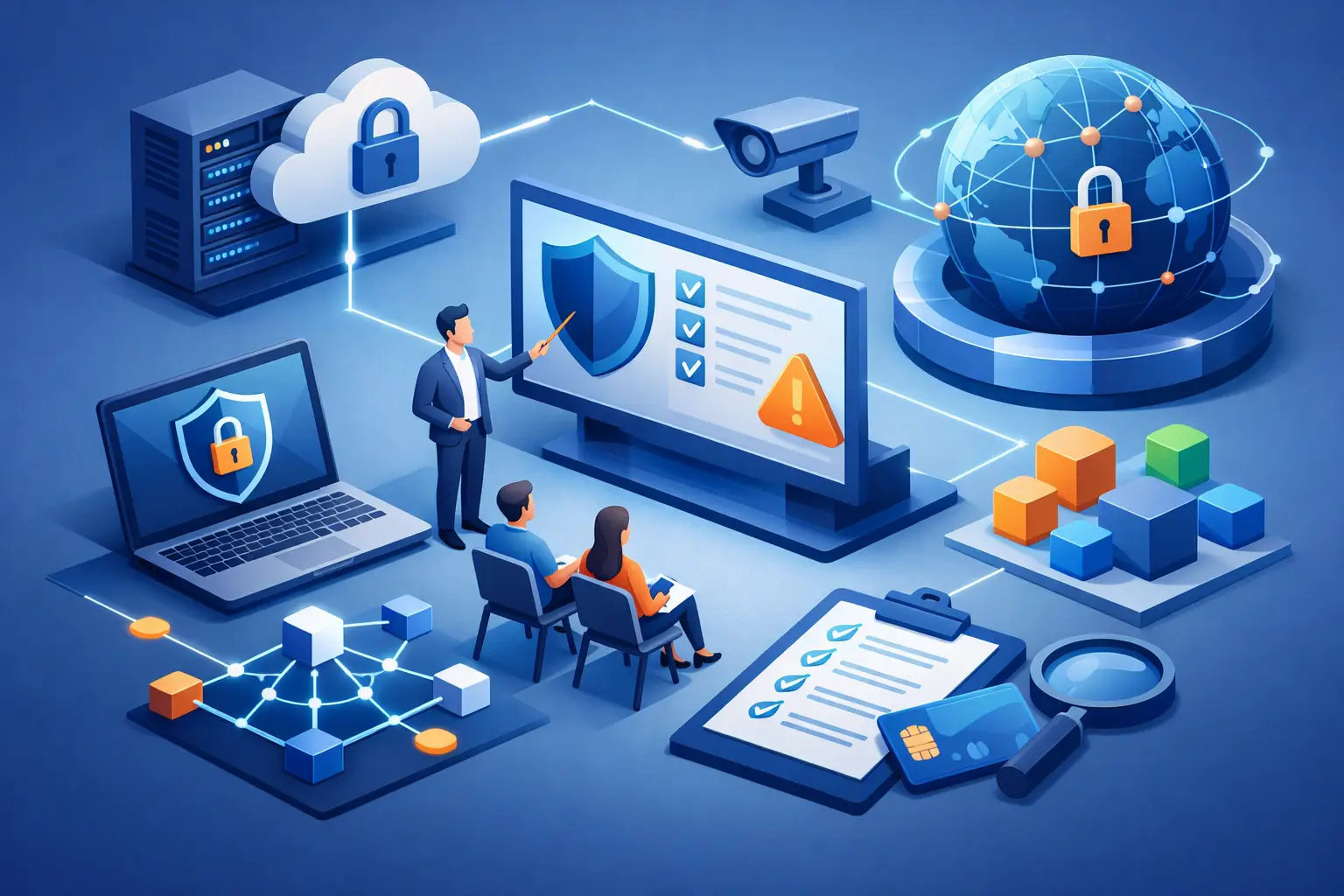
NIS2 Training Rollout Example for Real Readiness
A NIS2 training rollout cannot be a generic annual course assigned to everyone on Monday morning. When a regulator, customer, or board asks how your organization prepares people to manage cyber risk, completion records alone will not tell a convincing story. This NIS2 training rollout example shows how a structured, role-based program can turn legal obligations into better day-to-day decisions.
The central principle is straightforward: cybersecurity starts with people - not tools. NIS2 expects organizations in scope to manage cyber risk with appropriate measures, and management bodies have specific accountability for oversight and training. The exact legal duties depend on national implementation and your organization’s classification, so legal counsel should validate the final program. But the operational direction is clear: employees, leaders, and high-risk teams need to know what to do before an incident tests them.
What this NIS2 training rollout example gets right
A credible rollout connects training to the risks people can actually influence. It does not treat finance, HR, frontline operations, software developers, executives, and IT administrators as one audience with identical responsibilities.
For example, every employee should understand phishing, password hygiene, data handling, and how to report suspicious activity. That baseline matters because a delayed report can turn a contained event into a business disruption. But privileged administrators also need instruction on access control, secure configuration, incident escalation, and third-party access. Procurement teams need to recognize supplier risk signals. Executives need enough practical knowledge to challenge risk decisions, approve resources, and fulfill their governance responsibilities.
The goal is not to make every employee a security engineer. The goal is to make every person a reliable part of the organization’s defense and response process.
The scenario: a multi-country services provider
Consider a fictional European provider of managed logistics and industrial support services. It operates in three EU countries, relies on cloud platforms and operational technology, and has 1,200 employees. Its leadership believes it may fall within NIS2 scope through its sector and business activities, while several major customers are already asking for evidence of cyber resilience.
The company has an annual security awareness course, but it has three weaknesses. It is offered only in English, it does not distinguish between job roles, and no one can show whether it improves incident reporting or secure behavior. The CISO, compliance lead, HR director, and operations leader create a 90-day rollout designed to address those gaps.
They begin with a practical decision: training is owned jointly. Security defines risk priorities and learning content. Compliance maps the program to applicable obligations and evidence needs. HR and learning and development manage assignment, reminders, and new-hire onboarding. Business leaders are accountable for participation within their teams. This shared ownership prevents security training from becoming a task that the security team must chase alone.
Phase one: map people to risk
The first 30 days focus on audience segmentation and a baseline assessment. The team identifies six learning groups: all employees, managers, executives and board members, privileged IT users, operational technology personnel, and high-risk business functions such as finance, procurement, and customer support.
This is where organizations often make the wrong trade-off. A single course is cheaper and faster to launch, but it produces shallow engagement and weak evidence of readiness. Highly customized learning for every job title can become difficult to maintain. The better approach is a common core program with targeted modules for roles that carry elevated access, authority, or operational risk.
The baseline assessment includes a short knowledge check, a review of recent security incidents, and interviews with department leaders. The company discovers that employees know how to spot suspicious emails, but many do not know the internal reporting channel. Operations staff are also unsure when a technology issue becomes a cyber incident that requires escalation. Those findings shape the curriculum.
Phase two: launch training by role and language
In days 31 through 60, the organization delivers a 25-minute foundational course to all personnel in their primary working language. It uses realistic examples drawn from logistics, vendor communications, invoice fraud, and account takeover attempts. Employees complete interactive scenarios, a short quiz, and an acknowledgment of the company’s reporting procedures.
Managers receive an additional module on escalation, team accountability, and maintaining business operations during an incident. Their training emphasizes a common failure point: a manager who tries to solve a suspected incident informally instead of reporting it quickly through the approved process.
Privileged IT users and operational technology teams receive deeper instruction on access management, change control, remote access, logging, vulnerability handling, backup expectations, and handoffs to the incident response team. The content is practical because these groups need to make decisions under pressure, not recite policy language.
The executive and board session is shorter but more strategic. It covers governance accountability, risk appetite, material business impacts, supplier exposure, and the questions leaders should ask during a cyber event. A board does not need a technical briefing on every control. It does need to understand what information it should expect, how quickly it must act, and how it will test whether management is prepared.
Phase three: test behavior, not just completion
During days 61 through 75, the company moves from learning to validation. It runs a controlled phishing simulation, an incident-reporting exercise, and a tabletop scenario involving a disrupted supplier portal. The purpose is not to embarrass employees or create a leaderboard of failure. It is to identify friction in the response process.
The phishing simulation reveals that reporting rates vary sharply across offices. One location has a clear reporting button in its email client; another requires employees to search the intranet for instructions. The organization fixes the reporting path and repeats the exercise a month later. That is a meaningful training outcome because the program changed the organization’s ability to detect and escalate threats.
Tabletop exercises should reflect real operational dependencies. In this example, the scenario asks who contacts a critical supplier, who makes the decision to isolate affected systems, how customer communications are approved, and when leadership is briefed. Training exposes unclear ownership before a real incident exposes it publicly.
Phase four: document evidence for oversight
By day 90, the program produces a clear evidence pack for leadership, internal audit, customers, and compliance reviews. It includes training assignments by role, completion and assessment results, translated course versions, overdue learner escalations, tabletop records, and remediation actions.
The most useful metrics go beyond completion rates. The company tracks knowledge improvement between pre- and post-training assessments, suspicious-email reporting rates, time from discovery to internal reporting, repeat simulation performance, and completion among high-risk roles. It also tracks whether managers have reviewed overdue assignments and whether new hires complete the right modules within their first weeks.
Numbers need context. A high phishing-reporting rate may indicate strong awareness, but it may also mean employees are reporting harmless messages because they lack confidence. A low failure rate may look positive, yet it can hide a simulation that was too easy. Security leaders should interpret results with operations, HR, and compliance rather than treating one metric as proof of maturity.
Make the program sustainable after launch
A one-time rollout will not keep pace with staff turnover, evolving threats, supplier changes, or changes in national NIS2 implementation. The company in this example adds training to onboarding, assigns annual refreshers, and issues short scenario-based updates when a relevant threat emerges. It also schedules quarterly reviews of incident trends and training performance.
CISO EDU programs can support this model with localized, regulation-aligned modules, interactive learning, quizzes, and certifications that give leaders measurable proof of participation and understanding. The platform matters, but the operating model matters more: content must reach the right people, in the right language, at the moment their role requires action.
The strongest NIS2 training program is one employees recognize in the middle of a difficult decision. If a finance analyst reports an unusual invoice, an operator escalates a suspicious system change, and a manager knows exactly who to call, training has become more than a compliance record. It has become part of how the business protects itself.
FAQ
1. What should a NIS2 training program include?
A NIS2 training program should include cybersecurity awareness, phishing prevention, password security, incident reporting, data handling, business continuity, supply chain security, and role-specific responsibilities. Training should be tailored to different employee groups based on risk and access levels.
2. How often should NIS2 training be conducted?
Organizations should move beyond annual awareness courses and provide continuous learning throughout the year. This may include onboarding training, refresher courses, phishing simulations, tabletop exercises, and targeted updates whenever new threats or policy changes emerge.
3. Why is role-based training important for NIS2 compliance?
Different roles face different cybersecurity risks. Executives, IT administrators, developers, procurement teams, finance staff, and general employees require different levels of knowledge and practical skills. Role-based training improves effectiveness and demonstrates a risk-based approach to security.
4. How can organizations measure the effectiveness of NIS2 training?
Organizations should track more than completion rates. Useful metrics include phishing reporting rates, assessment scores, incident reporting times, simulation performance, repeat errors, participation in exercises, and improvement in security awareness over time.
5. What evidence should organizations keep for NIS2 training programs?
Organizations should maintain records of training assignments, completion rates, assessment results, role-based training paths, translated course versions, simulation outcomes, tabletop exercise reports, remediation activities, and periodic performance reviews to demonstrate training effectiveness and governance oversight.

Written by: Ivan Energiev

IT Project Coordinator · Operations Excellence & Service Delivery Leader at Advanced Vision IT Ltd | Published on September 01 2026
Ivan advises insights on IT project coordination, operations excellence, and service delivery leadership.