


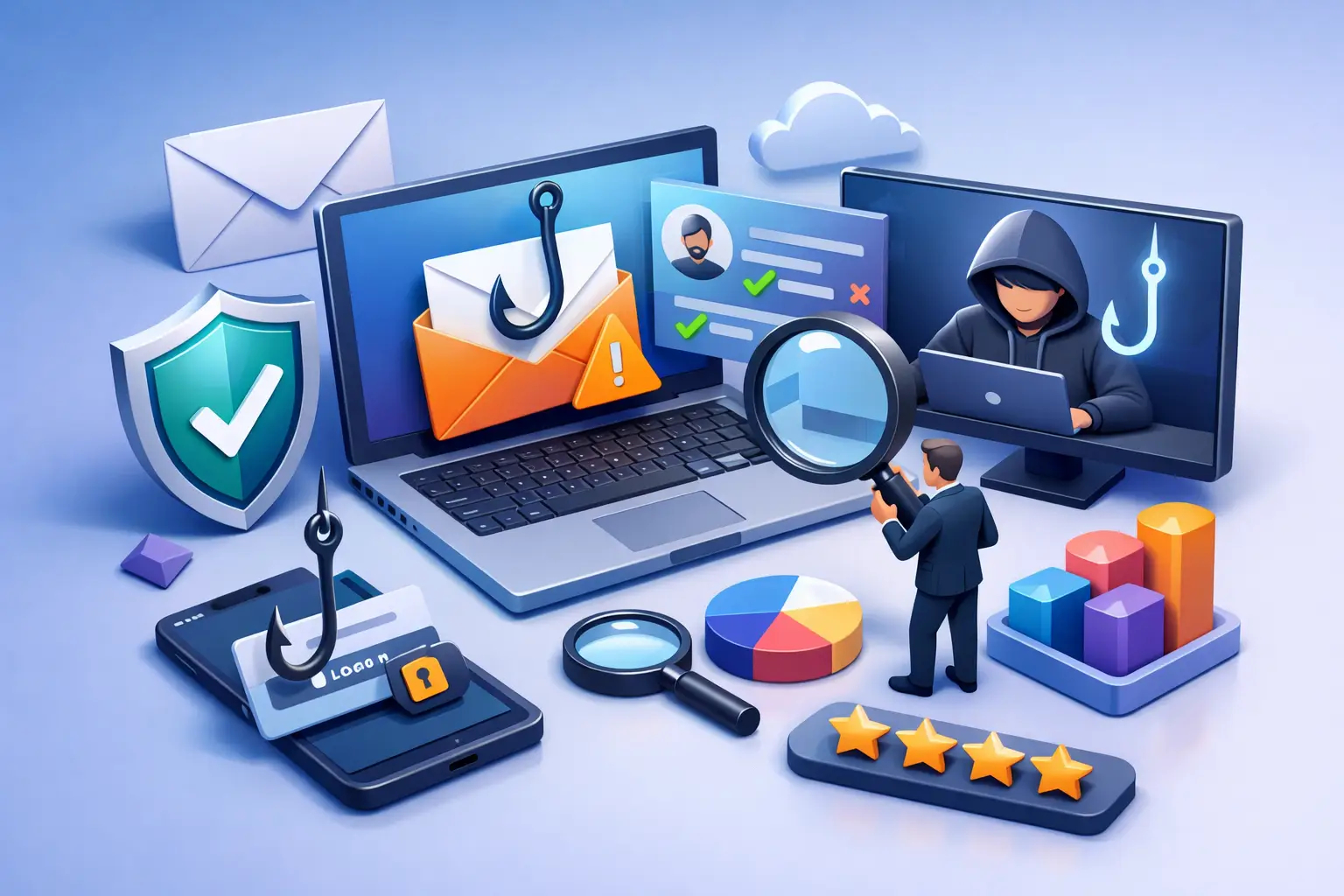
Best Phishing Simulation Software Review Guide
Phishing simulation software helps organizations measure human risk, improve employee awareness, and strengthen cybersecurity through realistic attack simulations and continuous training. Combined with structured security awareness and NIS2 compliance programs, phishing simulation platforms become a critical part of modern cyber resilience and regulatory readiness strategies. Explore all NIS2 compliance and cybersecurity awareness training courses for employees and organizations.
One failed click can turn a routine workday into a breach, a regulatory incident, or a board-level crisis. That is why any serious phishing simulation software review should start with one point: the goal is not to send fake emails. The goal is to reduce measurable human risk, prove training impact, and strengthen security culture across the business.
Too many buyers still evaluate phishing platforms like commodity tools. They compare template counts, dashboards, and pricing tiers, then miss the harder question: will this platform change employee behavior in your environment, under your regulatory pressures, and at your scale? For CISOs, compliance leaders, HR, and L&D teams, that difference matters.
What a phishing simulation software review should actually measure
A strong phishing simulation software review should focus on more than templates, dashboards, or click rates. The real goal is to measure whether the platform reduces human risk, improves employee behavior, and helps the organization build long-term cyber resilience.
A useful review goes beyond campaign setup and click rates. A platform can look polished in a demo and still fail where it counts - segmentation, reporting clarity, localization, remediation workflows, and executive visibility. If your organization operates across regions, subsidiaries, or regulated sectors, those gaps show up fast.
Start with behavioral outcomes. Can the software track repeat clickers, reporting rates, credential submission rates, and improvement over time? Can it distinguish between departments, geographies, seniority levels, or high-risk roles? If the platform only tells you who clicked, you are looking at activity data, not risk intelligence.
The second measure is operational fit. Security teams do not need another console that creates work without improving readiness. The best platforms make campaigns easy to schedule, automate enrollment, trigger just-in-time training, and export reporting that leadership can understand. If your IT or awareness team has to manually patch together every campaign and report, adoption will stall.
The third measure is compliance relevance. Organizations facing NIS2, sector-specific obligations, or internal audit scrutiny need evidence. That means defensible records, role-based reporting, and training data that can support governance discussions. A simulation program should not sit outside your compliance framework. It should reinforce it.
Phishing simulation software review criteria that matter most
The most important phishing simulation software review criteria are not limited to features or dashboards. The real value of a platform comes from its ability to reduce measurable human risk, improve employee behavior, and support long-term cybersecurity resilience.
The strongest platforms usually separate themselves in five areas.
First, template quality matters, but not in the way vendors often frame it. A library with thousands of templates sounds impressive, yet volume alone is not useful. What matters is whether the scenarios reflect current attacker behavior, local language norms, internal business processes, and role-specific risk. A finance team, an engineering group, and executive assistants face different lures. Good simulation software reflects that.
Second, user targeting and campaign logic are critical. Mature programs need more than one-size-fits-all testing. You should be able to target new hires, privileged users, remote workers, leadership, and repeat offenders differently. Better platforms also support progressive difficulty so employees are not tested with the same obvious bait every quarter.
Third, reporting must serve two audiences at once: operators and decision-makers. Security teams need detailed telemetry. Executives need trend lines, risk reduction signals, and evidence that awareness spending is improving resilience. If the reporting is too technical for leadership or too shallow for practitioners, it will create friction on both sides.
Fourth, remediation features deserve close attention. The best phishing simulation software does not stop at failure metrics. It routes users into short, relevant training, captures completion data, and helps teams monitor behavior change. This is where awareness and simulation should work together rather than operate as separate programs.
Fifth, integrations matter more than many buyers expect. Directory integrations, SSO, LMS compatibility, SIEM alignment, and support for broader awareness workflows can save significant administrative effort. A disconnected tool becomes a reporting island. A connected one becomes part of your risk management program.
Common strengths and trade-offs across the market
Most enterprise-focused phishing simulation platforms now offer a familiar baseline: campaign builders, template libraries, landing pages, tracking pixels, and summary reports. That means surface-level feature parity is common. The real differences appear in depth, flexibility, and the quality of the educational follow-through.
Some platforms are strong on simulation realism but weak on training depth. They can test employees effectively, yet offer generic remedial content that does little to build long-term awareness. Others are built from a training-first perspective and provide excellent learning modules, but less flexibility in campaign customization or attack simulation sophistication.
This is where buyers need discipline. If your biggest problem is proving compliance and documenting workforce readiness, a training-led platform may outperform a more technical testing tool. If your biggest problem is targeted attacks against high-risk departments, simulation realism and segmentation may carry more weight. It depends on your threat profile and program maturity.
There is also a trade-off between simplicity and control. Lightweight platforms can help smaller teams launch quickly, which is valuable. But larger or multinational organizations often need granular controls, delegated administration, localized content, and role-based views. Those capabilities add complexity, yet they may be necessary for scale.
Why training quality changes the value of the platform
A phishing program that only catches mistakes creates fatigue. A phishing program that teaches employees how to spot, report, and recover from suspicious messages builds resilience. That distinction is central to any serious buying decision.
Employees should not feel ambushed by security theater. They should understand why the exercise exists, what good reporting behavior looks like, and how the organization supports better decisions. Short post-click modules, targeted refreshers, and role-relevant microlearning all improve the odds that simulation results lead to lasting improvement.
For that reason, phishing simulation software should be evaluated alongside your broader awareness strategy. If the platform cannot connect testing to meaningful education, your metrics may plateau. Businesses that want measurable improvement need both pressure testing and learning reinforcement. Cybersecurity starts with people - not tools.
How to evaluate phishing simulation software in a real buying process
Begin with your operating model, not the vendor demo. Define what success looks like over the next 12 months. That might mean reducing repeat click behavior, improving report rates, satisfying audit requirements, or rolling out localized campaigns across multiple business units. Without that baseline, every feature will look equally valuable.
Then pressure-test the platform with your actual use cases. Ask how it handles remote users, frontline employees, shared devices, multilingual teams, and regional policy differences. If your organization operates in Europe or the GCC, localization and regulatory context are not nice-to-haves. They affect engagement, comprehension, and defensibility.
Next, review reporting through the eyes of the stakeholders who will use it. A CISO may want trend data and departmental risk exposure. Compliance may want training completion records and campaign evidence. HR or L&D may want clarity on learner assignment and follow-up. If one platform can support all three without manual workarounds, that is a meaningful advantage.
It is also smart to examine how the vendor handles false confidence. Some tools produce attractive dashboards but make it difficult to understand whether behavior is truly improving or users are just learning the patterns of the tests. Ask how the platform varies timing, lure style, difficulty, and delivery logic. Good simulations evolve. Predictable ones train employees to pass the test rather than recognize real threats.
Red flags in any phishing simulation software review
Be cautious of vendors that overemphasize click rates as the primary KPI. Clicks matter, but they are only one signal. Reporting behavior, repeat susceptibility, completion of follow-up training, and trend improvement by role often tell a more useful story.
Be wary of generic content libraries with weak localization. A phishing email that feels unnatural to a US audience, or poorly adapted for regional teams, damages credibility and skews results. Realism is not cosmetic. It is the basis for valid measurement.
Another red flag is a platform that isolates simulation from the rest of security education. If campaign outcomes do not feed into awareness planning, leadership reporting, and targeted remediation, the tool may create data without producing maturity.
Finally, watch for administrative burden. If launching campaigns, managing exemptions, and preparing reports all require heavy manual effort, the total cost of ownership rises fast. The right platform should reduce workload while improving visibility.
The best fit is rarely the one with the longest feature sheet
For most organizations, the best phishing simulation platform is the one that fits the business, not the one that wins a generic feature comparison. A global enterprise with compliance pressure, distributed teams, and executive reporting needs a different solution than a mid-sized company just starting formal awareness testing.
That is why the strongest buying decisions connect simulation to business outcomes. Can this software help reduce incident likelihood? Can it support compliance readiness? Can it show the board that human risk is being managed with discipline? Can it reinforce training rather than simply expose failure?
At CISO EDU, that is the standard worth applying. Effective phishing simulation is not about catching people out. It is about building cyber-smart teams, protecting the business, and turning awareness into a measurable line of defense.
Choose the platform that helps your people improve after the click, because that is where risk actually starts to fall.
FAQ
1. What should a phishing simulation platform actually measure?
It must measure behavioral outcomes, not just clicks — repeat offenders, reporting rates, credential submissions, and improvement over time. As the document states: “If the platform only tells you who clicked, you are looking at activity data, not risk intelligence.”
2. What makes a platform suitable for distributed or regulated organizations?
Localization, segmentation, role‑based reporting, compliance‑ready evidence, and strong integrations. Without these, the platform fails quickly in multinational or regulated environments.
3. What separates effective training from “security theater”?
Effective programs teach and reinforce behavior, not just catch mistakes. As the text notes: “A phishing program that only catches mistakes creates fatigue.”
ADVANCED VISION IT - MALTA Address: Suite 8, Ta’ Mallia Buildings, Triq In‑Negozju, Zone 3, Central Business District, Birkirkara, CBD 3010, Malta
Registration number: C111282, VAT Number: MT31713827
Phone:+35679224404
Email: office@advisionit.com
ADVANCED VISION IT - BULGARIA
Address: 35 Dimitar Hadzhikotsev str. Ent A, Lozenets, Sofia, Bulgaria
ID No: 205789039, VAT No: BG205789039
Phone: +359 888 258 530
Email: office@advisionit.com