


NIS2 – Cybersecurity in the Research & Development Services Industry - Advanced (Monthly Subscription)
COURSE DESCRIPTION
In research and development, a single compromised system can set back years of work: ransomware on LIMS, ELN and HPC storage halts experiments and simulations, a compromised researcher mailbox exposes unpublished findings and patent drafts, and insecure vendor remote access to scientific instruments opens a direct path into the lab network. Attackers exploit grant disbursements and changed bank details, collaboration platforms shared with consortium partners, legacy instruments that cannot be patched and the window before a patent is filed, while every incident puts research integrity, intellectual property, regulatory submissions and funder trust at risk.
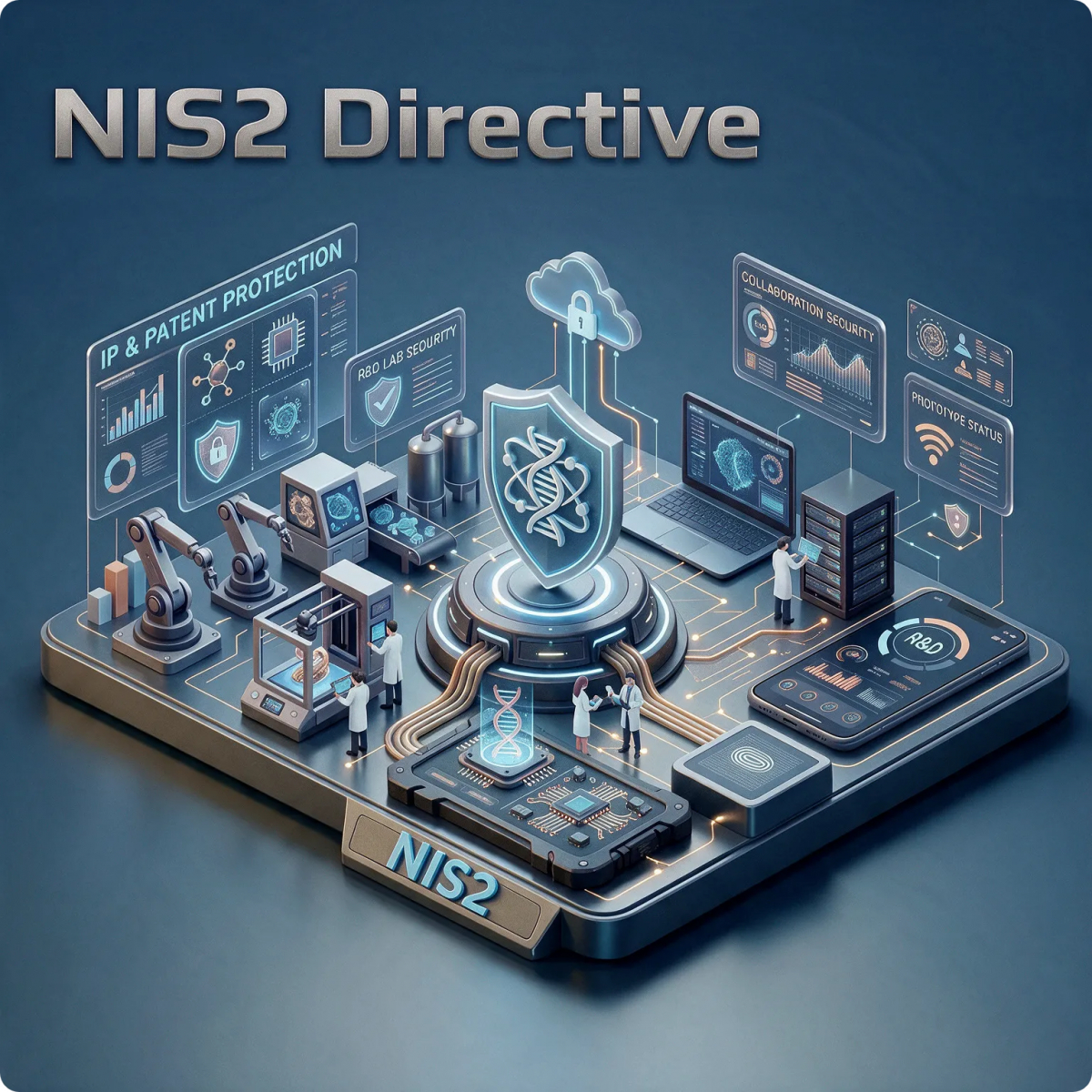
Building on the Beginner course, this course moves from awareness to action. It prepares the people who run research, laboratory, IT and grant administration processes to protect payments and data sharing, research subject and export-controlled data, endpoints and instruments, cloud platforms, vendors and recovery plans in line with GDPR, NIS2, GxP and export controls such as EAR and ITAR. Its two R&D-specific modules focus on cyber protection of intellectual property and trade secrets, and on the security of laboratory and research infrastructure.
The course is developed by the CISO Edu team – the cybersecurity training platform of Advanced Vision IT. The company has 15 years of industry experience and is certified to ISO 27001, ISO 9001, and ISO 20000-1 standards. It is also an AWS Cloud Certified Partner and holds multiple certifications and partnerships with leading cybersecurity solution providers, including Sophos, Acronis, and other established technology companies. The content is developed by specialists who work daily with NIS2 compliance requirements, industrial control systems (ICS), and critical infrastructure environments.
What Participants Will Learn
- ✓Apply verification procedures for payments and data-sharing requests to stop grant funding redirection, equipment vendor and collaboration partner impersonation, compromised mailboxes and lookalike domains, and respond to suspected business email compromise.
- ✓Classify and protect intellectual property, regulated research data, research subject data and export-controlled technical data across the data lifecycle, applying GDPR principles such as lawful basis, data minimization and pseudonymization.
- ✓Manage the R&D endpoint landscape with a tiered patching strategy, protection beyond patching, segmentation and monitoring of scientific instrument endpoints and control of shadow IT.
- ✓Secure research cloud and SaaS platforms with the shared responsibility model, encryption, SaaS security evaluation, export control and data sovereignty requirements and safe multi-institutional collaboration.
- ✓Detect, triage and contain incidents affecting accounts, HPC clusters and instruments, preserve evidence and meet the separate notification timelines of NIS2, GDPR, export controls, GxP and funding agencies.
- ✓Assess cyber risk in research terms, translate it into business language, track security KPIs and make decisions under uncertainty with pre-agreed thresholds.
- ✓Assess vendors by risk tier, including export-control compliance and collaboration-partner due diligence, include security clauses in contracts, monitor vendors over time and respond to a vendor compromise.
- ✓Run a business impact analysis, set RTO and RPO for research systems, apply the 3-2-1 backup rule to large and GxP datasets, plan disaster recovery and test it through tabletop and technical exercises.
- ✓Classify and protect intellectual property and trade secrets, secure the patent filing window, block research data exfiltration vectors, manage insider risk and keep collaborations within export control rules.
- ✓Secure HPC clusters, segment scientific instrument networks, protect LIMS, connected lab equipment and IoT, cleanroom access and environmental monitoring, and keep GxP systems in their validated state.
Ideal for
Course Modules
Next Step: From Operational Readiness to Strategic Leadership
This course builds on the Beginner course. The next step is the Expert course, which covers threat modeling, zero trust for research environments, incident response playbooks, digital forensics, security architecture reviews, governance, compliance with GDPR, NIS2, ISO 27001, GxP and export controls, crisis management, roadmap design and emerging threats such as AI-enabled attacks and quantum risk.
Next Level