


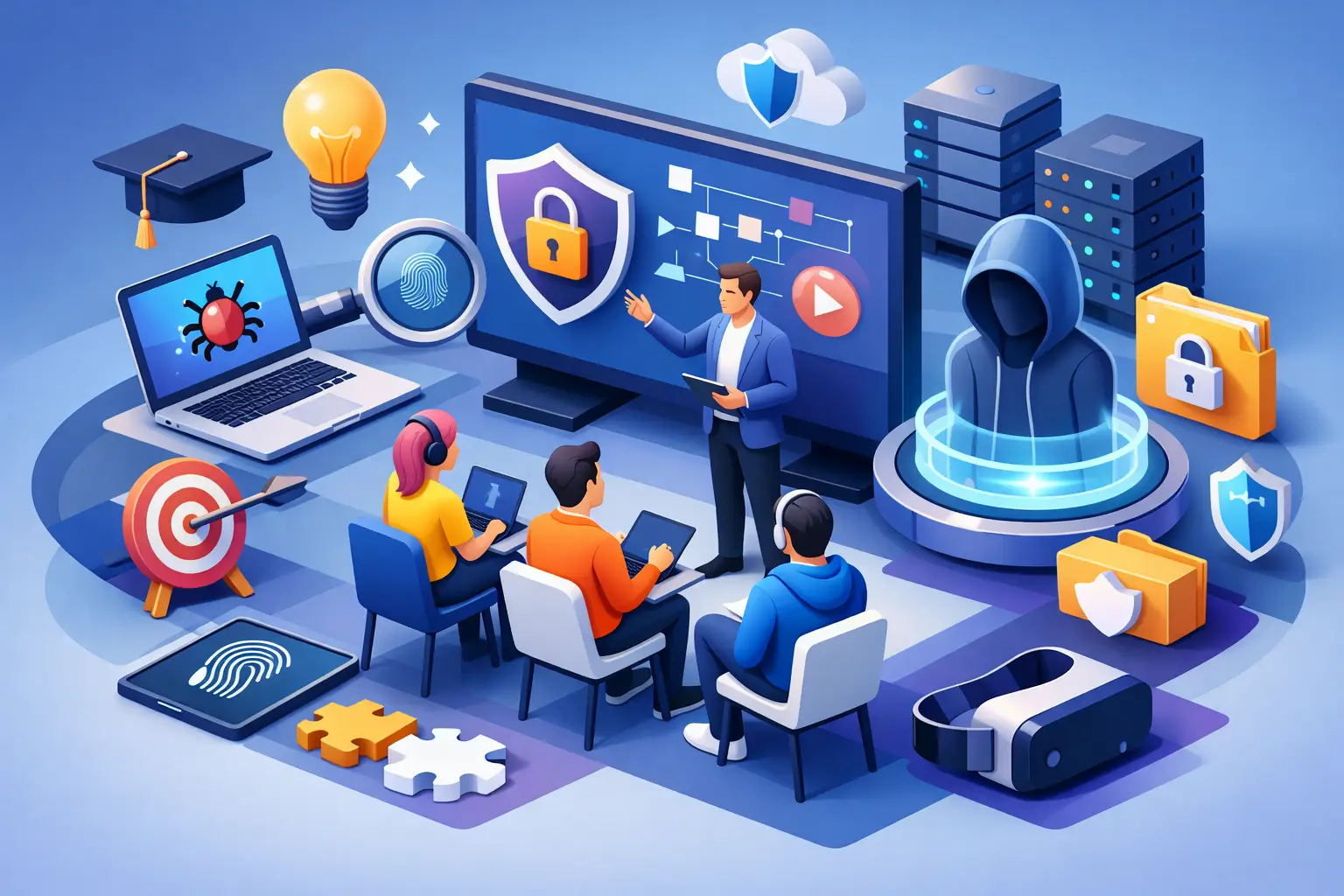
What Makes Cybersecurity Training Engaging?
A payroll manager receives an urgent message from the CEO asking for a same-day wire transfer. An employee scans a QR code at a conference and lands on a fake Microsoft sign-in page. A developer is prompted to approve an unfamiliar multifactor authentication request. These are not abstract threats. They are the moments when training either changes behavior or fails.
What makes cybersecurity training engaging is not flashy graphics or a high completion rate. It is the ability to make people recognize risk, make a better decision under pressure, and remember that decision when it counts. For security leaders, the standard is simple: training must reduce human-driven risk while giving the organization evidence of readiness.
Engagement Starts With Relevance
Employees disengage when training feels disconnected from their role, tools, and daily decisions. A generic lesson on phishing may satisfy a baseline requirement, but it will not hold the attention of a finance team facing business email compromise or a customer support team handling sensitive identity data.
Relevant training uses the situations people actually encounter. Finance teams need to practice payment-change verification and vendor impersonation. HR teams need to recognize fraudulent document requests and payroll diversion attempts. Executives need to understand targeted spear phishing, travel risk, and the consequences of approving an unexpected authentication prompt. Developers and administrators need guidance that reflects privileged access, cloud configuration, and secure data handling.
Localization matters as much as role relevance. A scenario involving a U.S. tax notice may not resonate with a workforce in the GCC or Europe. Regional language, regulations, common fraud tactics, and reporting channels should all be reflected in the training. When employees can see themselves in the scenario, security stops being someone else’s job.
What Makes Cybersecurity Training Engaging in Practice
Engagement comes from participation. Employees should not simply watch a video, click through slides, and select the obvious answer at the end. Effective training asks them to assess a message, choose a response, and see the consequence of that choice.
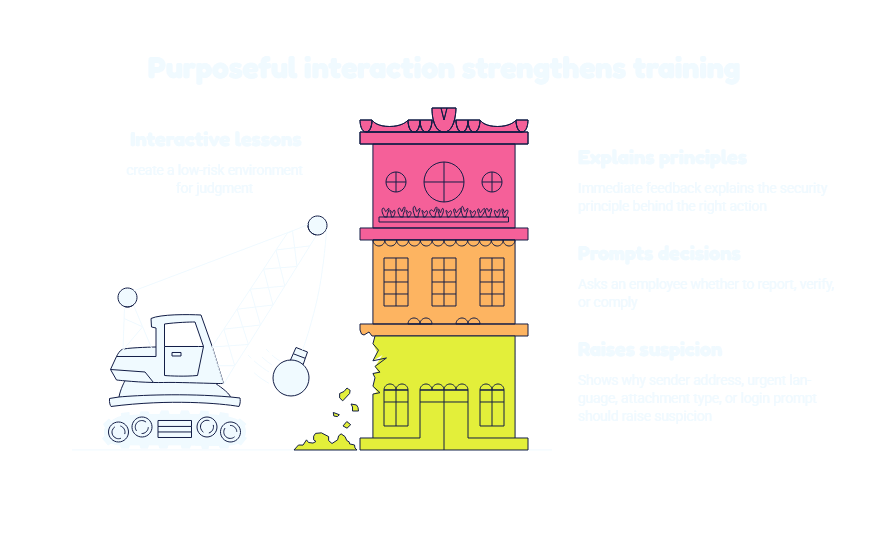
Interactive lessons work because they create a low-risk environment for judgment. A realistic phishing simulation can show why a sender address, urgent language, attachment type, or login prompt should raise suspicion. A branching scenario can ask an employee whether to report a suspicious request, verify it through a trusted channel, or comply. Immediate feedback then explains the security principle behind the right action.
This does not mean every module needs game mechanics. Points, badges, and leaderboards can motivate some teams, but they can also feel forced or create unhealthy competition. The stronger approach is purposeful interaction: short decisions, realistic pressure, clear feedback, and a direct connection to the employee’s responsibilities.
Well-designed quizzes also matter. They should test recognition and judgment, not memory of policy wording. Asking an employee to identify which step verifies a payment-change request is more useful than asking them to recite a policy number. Certifications can reinforce accountability, especially for compliance-sensitive roles, but only if the assessment reflects real-world decisions.
Short, Frequent Training Beats the Annual Marathon
A single annual awareness course asks employees to retain too much, for too long. It may produce a compliance record, but it rarely creates durable habits. Cyber threats change quickly, and attackers rely on the fact that people forget details after training ends.
Engaging programs use short learning moments delivered over time. A five-minute module on QR code phishing before a major event season is easier to absorb than a 45-minute general course. A brief reminder about authentication fatigue after a spike in MFA attacks gives the topic immediate context. Reinforcement turns awareness into recall, and recall supports action.
Frequency should be intelligent, not excessive. Overloading employees with alerts, quizzes, and simulations can create training fatigue. The right cadence depends on risk exposure, role sensitivity, recent incidents, regulatory obligations, and the maturity of the organization’s security culture. High-risk groups may need more focused reinforcement, while lower-risk populations can receive foundational training and timely updates.
People Need a Clear Path to Report Risk
Training becomes more engaging when employees know their actions have a purpose. Telling someone to "be careful" is vague. Showing them exactly how to report a suspicious email, who receives the report, what happens next, and why fast reporting protects colleagues gives them a meaningful role in defense.
A reporting process must be simple enough to use under pressure. If employees need to search an intranet, remember a mailbox, or worry that they will be blamed for asking a question, they may stay silent. Security teams should reinforce that reporting a suspicious message is the right action even when it turns out to be legitimate.
This is where culture becomes visible. Employees pay attention when leaders treat security reports as valuable signals rather than interruptions. They disengage when the message is punitive, overly technical, or limited to annual compliance deadlines. A cyber-smart culture makes it safe to pause, verify, and escalate.
Compliance Should Add Context, Not Drain It
Organizations subject to NIS2, sector-specific obligations, privacy requirements, or internal audit standards need documented training. That requirement is real. But compliance language alone does not explain why an employee should care about a suspicious link or mishandled file.
The most effective programs connect the control to the consequence. Explain how secure behavior protects customers, operations, revenue, and the organization’s ability to meet its legal obligations. For leadership teams, connect awareness training to operational resilience, board oversight, and measurable risk reduction. For employees, connect it to the practical decisions they make every day.
Compliance alignment also requires precision. Training content, completion records, certifications, remediation, and reporting should be organized in a way that supports audits and demonstrates ongoing effort. Yet a program optimized only for evidence collection can become a check-the-box exercise. The goal is both: defensible compliance and safer behavior.
Measure Behavior, Not Just Completion
Completion rates are useful operational data, but they are not proof of learning. A 100% completion rate can coexist with employees who still enter credentials into fake websites or approve fraudulent payment requests.
Security leaders need a broader view of effectiveness. Measure assessment performance by topic and role. Track phishing simulation results over time, including reporting rates as well as click rates. Review how quickly employees report suspicious activity and which teams need targeted reinforcement. Look for patterns after training, incidents, or major business changes such as a new collaboration platform or acquisition.
Metrics require judgment. A single simulation can be influenced by timing, campaign difficulty, or employee workload. Publicly ranking people who fail may discourage reporting and damage trust. Use data to identify systemic weaknesses, improve content, and provide support where it is needed. The purpose is not to catch employees out. It is to help them become a reliable line of defense.
Leadership Participation Changes the Signal
Employees notice whether cybersecurity is treated as a shared business responsibility or an IT obligation. When executives complete relevant training, speak plainly about current risks, and support secure decision-making, the message carries weight.
Leadership training should not mirror employee awareness modules. Decision-makers need content on risk ownership, regulatory exposure, incident decision-making, vendor risk, and the financial implications of cyber resilience. They also need enough practical knowledge to ask the right questions: Are our highest-risk teams receiving role-based training? Can we demonstrate improvement? What human behaviors are contributing to incident exposure?
CISO EDU approaches this challenge by connecting interactive workforce education, compliance-ready learning, and executive-level security insight. That combination matters because the people approving risk decisions and the people handling daily threats both shape the organization’s security posture.
Engaging cybersecurity training respects employees’ time, reflects the threats they face, and gives them a clear action to take. Build training around the decisions that could protect your business tomorrow, then reinforce those decisions until secure behavior becomes the normal way work gets done.
FAQ
1. What makes cybersecurity training engaging?
Cybersecurity training becomes engaging when it is relevant to employees' roles, uses realistic scenarios, encourages active participation, and provides immediate feedback. Employees are more likely to retain knowledge and apply it when training reflects the decisions they face in their daily work.
2. How often should cybersecurity awareness training be delivered?
The most effective programs use short, ongoing training throughout the year rather than relying on a single annual course. Frequent reinforcement helps employees stay aware of emerging threats and strengthens long-term security habits.
3. Why is role-based cybersecurity training important?
Different teams face different risks. Finance staff may encounter payment fraud attempts, HR teams may deal with data-related scams, executives may be targeted by spear phishing attacks, and IT teams may face privileged access threats. Role-based training addresses these specific risks and improves learning outcomes.
4. How can organizations measure the effectiveness of cybersecurity training?
Organizations should look beyond completion rates and measure assessment scores, phishing simulation performance, reporting rates, response times, and behavioral improvements over time. These metrics provide a clearer picture of risk reduction and security awareness maturity.
5. How does cybersecurity training support compliance requirements such as NIS2?
Effective cybersecurity training helps organizations demonstrate compliance by maintaining training records, assessment results, certifications, and remediation activities. At the same time, it promotes secure behaviors that reduce operational and regulatory risks.

Written By
Yavor Y. Zlatev
CEO & Executive Director at Advanced Vision IT
Yavor leads strategic growth and technology operations at Advanced Vision IT, specializing in enterprise cybersecurity, cloud infrastructure, NIS2 compliance, and managed security service delivery. Find out more about me