


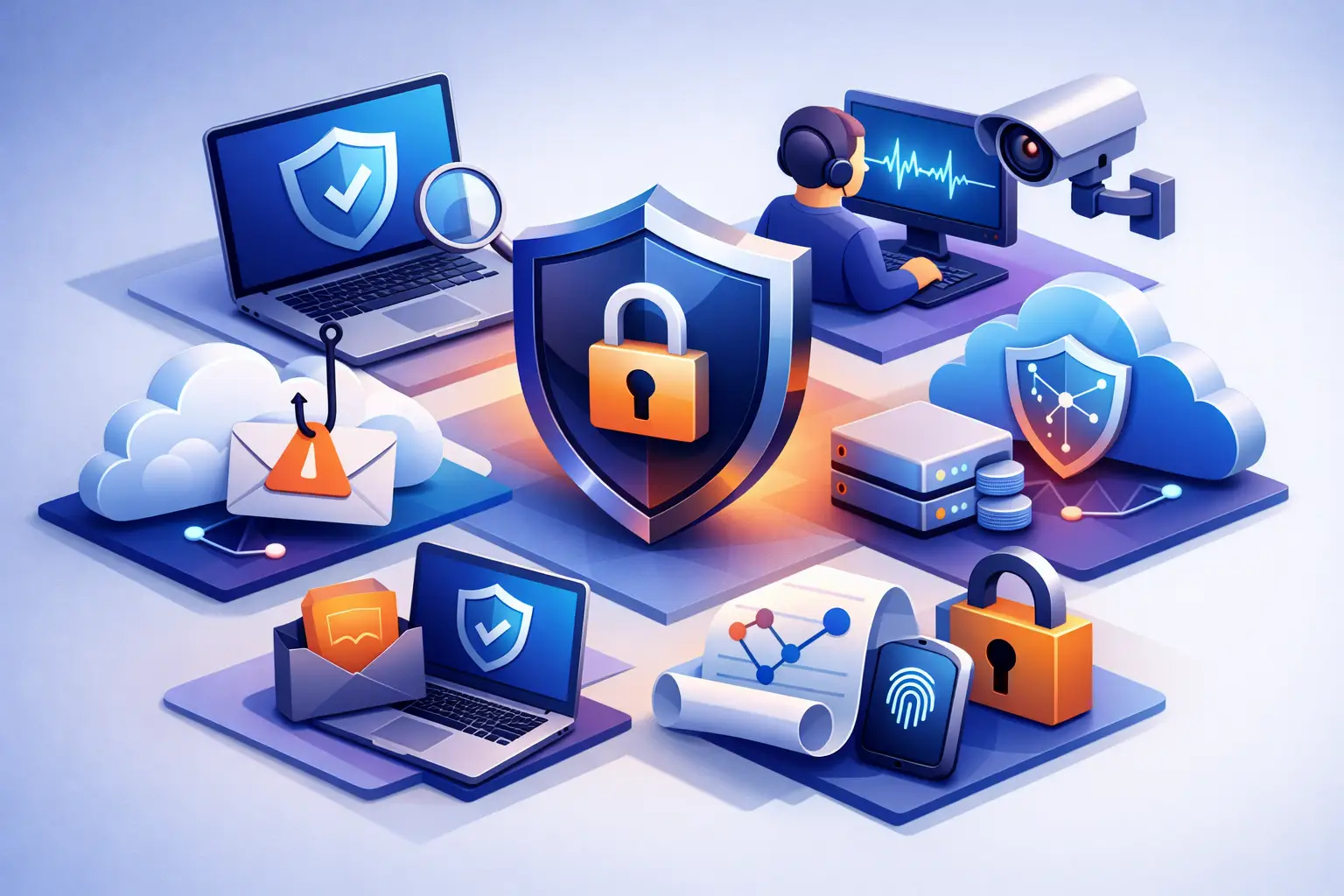
8 Cybersecurity Awareness Benefits That Matter
One employee clicks a fake invoice. Another reuses a password across work apps. A manager shares sensitive data over the wrong channel to hit a deadline. None of these actions looks dramatic in the moment, but they are exactly why cybersecurity awareness benefits show up on the balance sheet, in audit outcomes, and in incident response costs.
For most organizations, cyber risk is no longer a pure technology problem. It is an operational problem shaped by human behaviour, decision-making, and speed under pressure. Firewalls, endpoint protection, and identity controls matter. But if your workforce cannot recognize risk, report suspicious activity, and follow secure habits consistently, your security stack is carrying too much of the load.
Why are cybersecurity awareness benefits bigger than training completion
Too many companies still treat awareness as a checkbox. They roll out an annual course, track completion, and assume they have addressed the people side of security. That may satisfy a narrow policy requirement, but it rarely changes behaviour where it counts.
The real value comes when awareness training improves day-to-day judgment. That means employees pause before clicking, verify before transferring funds, challenge unusual requests, and escalate concerns early. It also means managers understand their role in enforcing secure workflows instead of bypassing them for convenience.
This is where the strongest cybersecurity awareness benefits appear. You are not buying content for its own sake. You are reducing preventable mistakes, strengthening control effectiveness, and improving your organization’s ability to operate safely under real conditions.
1. Lower risk from phishing, social engineering, and simple human error
The most immediate benefit is a reduction in common attack success rates. Phishing remains one of the easiest ways into an organization because it targets attention, urgency, and trust. Awareness training helps employees identify suspicious links, spoofed domains, credential theft attempts, and fake payment requests before they become incidents.
That benefit extends beyond email. Modern social engineering hits collaboration tools, text messages, voice calls, social media, and vendor impersonation schemes. Teams that understand attacker tactics are harder to manipulate, especially when they are trained on realistic examples tied to their role.
There is a trade-off here. Basic awareness can reduce low-level mistakes, but it will not stop every advanced social engineering attempt. High-risk teams such as finance, HR, procurement, and executives need more targeted scenarios because their exposure is different and the impact of a single mistake is higher.
2. Faster reporting and earlier incident containment
Awareness training does not just help prevent incidents. It also helps contain them. Employees who know what suspicious behaviour looks like are far more likely to report a phishing message, unusual login prompt, malware pop-up, or data handling issue quickly.
That time matters. Early reporting can be the difference between one compromised account and a wider business disruption. Security teams gain a head start on investigation, account lockdown, communication, and remediation. In practical terms, awareness improves the speed of detection across the organization without requiring every employee to be a security specialist.
This is one of the most underrated cybersecurity awareness benefits because it improves the value of your existing security operations. Better reporting gives analysts better signals. Better signals support faster decisions.
3. Stronger compliance posture and audit readiness
For regulated organizations, awareness training is not optional. It is often a core expectation tied to frameworks, contractual obligations, and sector-specific requirements. Whether the driver is NIS2, ISO-aligned practices, privacy regulations, or internal governance, employees must understand their responsibilities.
The business case goes further than passing an audit. Effective awareness supports policy adoption, evidence of due diligence, and clearer role accountability. It helps show regulators, customers, insurers, and boards that security is being operationalized, not just documented.
Still, compliance-driven training can fail if it is too generic. A policy slideshow once a year may generate records, but it rarely creates readiness. Organizations get better outcomes when training is localized, role-based, and aligned to the regulatory environment people actually work in. That is where compliance education starts to serve both audit needs and security performance.
4. Better security culture across teams and leadership
Culture is not built through slogans. It is built when secure behaviour becomes normal behaviour. Awareness training helps create that shift by making security part of routine work rather than an interruption from the security team.
When employees understand why controls exist, resistance tends to drop. When leaders model good behaviour, adoption tends to rise. When reporting is encouraged instead of punished, visibility improves. Over time, teams stop seeing security as someone else’s job.
This matters because culture affects consistency. A strong security culture reduces workarounds, improves policy adherence, and creates peer reinforcement. It also helps organizations scale securely, especially during periods of rapid hiring, remote work expansion, or digital transformation.
5. Lower costs from avoidable incidents and downtime
Many leaders ask the same question: What is the return on awareness training? The clearest answer is cost avoidance.
A preventable click can lead to ransomware exposure, wire fraud, credential compromise, legal costs, downtime, customer notification, outside counsel, and internal disruption. Even when a security incident does not become a headline event, the cleanup is expensive. IT resources are diverted. Projects slow down. Operations lose momentum.
Awareness training reduces the frequency of these avoidable events. It will not eliminate cyber risk, and it should never be presented as a substitute for technical controls. But it does reduce one of the most common and costly causes of incidents: human error under ordinary business conditions.
For executives and budget owners, that makes awareness easier to justify. The value is not abstract. It shows up in fewer disruptions, more resilient workflows, and less unplanned spend.
6. Improved resilience in high-risk functions
Not every part of the business faces the same level of exposure. Finance teams face invoice fraud and payment diversion. HR handles sensitive employee records and onboarding scams. Procurement is exposed to vendor impersonation. Executives are frequent targets for business email compromise and account takeover.
One of the strongest cybersecurity awareness benefits is the ability to tailor education to these realities. Role-specific training makes content more credible and more effective because it mirrors actual workflows, pressure points, and attack paths.
This is also where many organizations miss the mark. They deploy one standard module for everyone and wonder why risky behaviours persist. The better approach is layered awareness - foundational training for all staff, with deeper modules for privileged users, customer-facing teams, and leaders with approval authority.
7. More confident decision-making from managers and executives
Security failures are not always caused by front-line employees. They also happen when leaders approve insecure exceptions, underestimate vendor risk, delay remediation, or fail to connect cyber decisions to business impact.
Awareness at the management and executive level improves judgment where it has leverage. Leaders do not need deep technical expertise to make better calls. They need a clear understanding of common threats, regulatory implications, reporting obligations, and the operational consequences of weak security decisions.
That is especially important for organizations navigating board reporting, cyber insurance scrutiny, or resilience mandates. Security awareness at the top helps move cyber from a reactive IT issue to a business governance issue.
8. Measurable progress you can improve over time
A mature awareness program creates data, and data changes the conversation. Instead of asking whether training happened, leaders can ask whether behaviour is improving.
Useful measures might include phishing simulation trends, reporting rates, repeat failure patterns, policy acknowledgement, assessment scores, and completion by role or region. The point is not to build vanity metrics. The point is to identify where risk remains concentrated and where interventions are working.
This matters because awareness is not a one-time fix. Threats change. Workflows change. Regulations change. New hires join. Vendors gain access. A measurable program gives security, compliance, and L&D teams a way to adapt instead of repeating the same annual exercise.
What makes awareness training actually work
The difference between weak and effective programs usually comes down to relevance and reinforcement. Employees respond to training that feels connected to their job, their tools, and the kinds of decisions they make every day. They tune out generic content that feels detached from reality.
Strong programs are practical, brief enough to complete without resentment, and repeated often enough to shape habits. They use realistic scenarios, plain language, and region-specific context where needed. They also give employees a clear path to act - how to report, who to contact, what to verify, and when to escalate.
For global or regulated organizations, localization matters. A workforce operating across the US, Europe, and the GCC will not face identical legal requirements, threat patterns, or operational expectations. Awareness should reflect those differences if you want meaningful results. This is where providers such as CISO EDU can add value by aligning training with role, region, and compliance needs instead of treating the workforce as one undifferentiated audience.
The companies that benefit most from awareness training are not the ones chasing completion rates. They are the ones using education to change behaviour, support compliance, and strengthen decision-making from the front line to the boardroom. Build cyber-smart teams, and the payoff reaches far beyond training records.
FAQ
1. Why is cybersecurity awareness training important for organizations?
Cybersecurity awareness training is important because it reduces the risk of human error, which is one of the leading causes of security breaches. It helps employees recognize threats, follow secure practices, and respond quickly to suspicious situations.
2. How does cybersecurity awareness help prevent phishing attacks?
It teaches employees how to identify suspicious emails, links, and requests for sensitive information. With proper awareness, employees are less likely to fall for phishing attempts, reducing the chances of unauthorized access or financial loss.
3. Does awareness training replace technical security measures?
No, awareness training does not replace technical controls like firewalls or antivirus software. Instead, it complements them by ensuring employees act as an additional layer of defence rather than a weak point.
4. How can organizations measure the effectiveness of awareness training?
Effectiveness can be measured through metrics such as phishing simulation results, incident reporting rates, test scores, and employee behaviour trends over time.
5. Who needs cybersecurity awareness training the most?
All employees should receive basic training, but high-risk roles such as finance, HR, procurement, and executives require more specialized training due to their exposure to targeted attacks.
ADVANCED VISION IT - MALTA Address: Suite 8, Ta’ Mallia Buildings, Triq In‑Negozju, Zone 3, Central Business District, Birkirkara, CBD 3010, Malta
Registration number: C111282, VAT Number: MT31713827
Phone:+35679224404
Email: office@advisionit.com
ADVANCED VISION IT - BULGARIA
Address: 35 Dimitar Hadzhikotsev str. Ent A, Lozenets, Sofia, Bulgaria
ID No: 205789039, VAT No: BG205789039
Phone: +359 888 258 530
Email: office@advisionit.com