


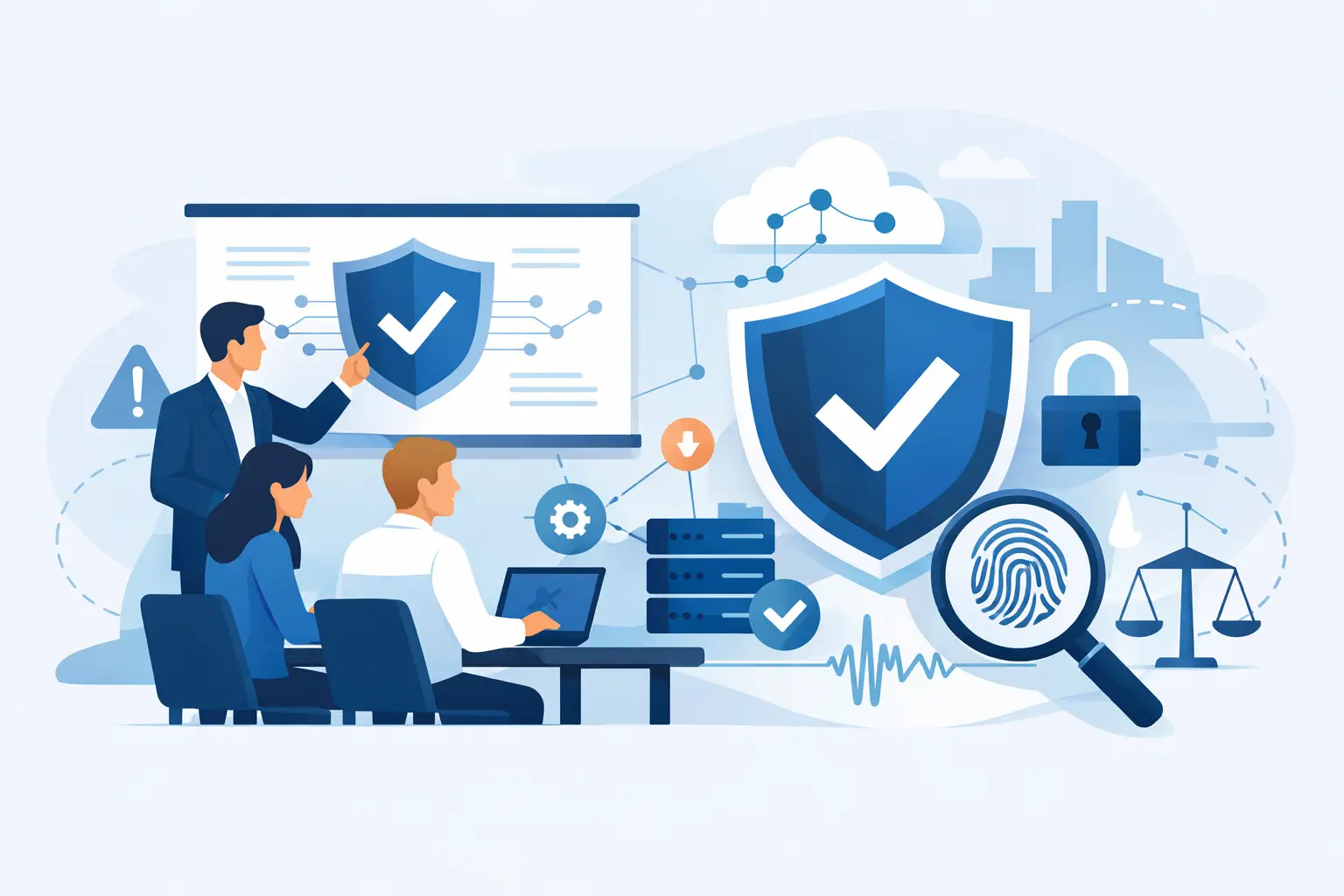
NIS2 Compliance Training That Reduces Risk
A policy binder will not stop a phishing click at 4:47 p.m. on a Friday. A firewall will not fix an employee who shares credentials with a fake vendor portal. NIS2 compliance training matters because the directive raises the bar on governance, accountability, incident readiness, and operational resilience - and people sit at the center of all four.
For organizations that fall within scope, training is no longer a nice-to-have awareness exercise run once a year. It is part of how you prove that security expectations are understood, adopted, and reinforced across the business. That includes leadership, technical teams, and the wider workforce. If your training program is generic, outdated, or disconnected from operational risk, it will not carry the weight NIS2 demands.
What NIS2 compliance training actually needs to do
The mistake many organizations make is treating NIS2 as a documentation problem. Documentation matters, but the directive is really pushing companies toward better cyber hygiene, stronger oversight, and faster response under pressure. Training should support those outcomes directly.
That means employees need more than definitions and policy acknowledgments. They need practical judgment. They need to recognize social engineering, report suspicious behavior quickly, handle data responsibly, and understand why resilience procedures exist. Managers need to know how to escalate issues, enforce controls, and support incident workflows. Executives need a clear view of their accountability, because NIS2 puts real responsibility on management bodies.
A useful training program does not just tell people what the regulation says. It translates regulatory expectations into role-specific actions. That is the difference between checking a compliance box and reducing business risk.
Why generic awareness training falls short
Most off-the-shelf security awareness programs were built for broad coverage, not regulatory alignment. They may cover phishing, passwords, and malware reasonably well, but NIS2 compliance training requires more precision.
NIS2 is tied to resilience, reporting discipline, supply chain risk, governance, and sector-specific exposure. A generic annual course will rarely address how an operations lead should respond to a disruption, what a department head is expected to do during an incident, or how management oversight connects to cyber accountability. It also tends to ignore localization, which becomes a problem for organizations operating across multiple European jurisdictions or serving regulated entities in affected sectors.
There is also a timing issue. Annual awareness alone does not create readiness. Threats change too fast, staff turnover is constant, and incident processes break down when they are not reinforced. Effective programs use recurring learning, scenario-based exercises, and measurable validation to make sure knowledge turns into action.
Who needs training under NIS2
One of the fastest ways to weaken your compliance posture is to train only the IT team. NIS2 is broader than that.
Management needs dedicated education because accountability is not abstract under this directive. Leaders should understand their oversight obligations, the business impact of cyber risk, the reporting expectations around incidents, and the consequences of weak governance. This audience does not need a technical deep dive on every control. They need clarity on decisions, duties, and risk ownership.
Security and IT teams need training that supports implementation and response. That includes incident handling, access control, secure administration, third-party risk awareness, and the operating realities of resilience planning.
The general workforce needs practical instruction on the behaviors that most often trigger incidents: phishing response, safe credential use, remote work risks, sensitive data handling, reporting procedures, and basic fraud awareness. In many organizations, HR, procurement, finance, and customer-facing teams deserve added attention because their exposure patterns differ.
This is where a role-based model becomes essential. Not everyone needs the same content, but everyone needs relevant content.
What strong NIS2 compliance training looks like
The best programs are built around business function, risk level, and proof of completion. They are not long for the sake of being thorough. They are structured to change behavior.
A strong baseline includes short interactive modules, knowledge checks, and certification records that can be tracked over time. But the more important layer is contextual relevance. If your finance team sees examples tied to invoice fraud and impersonation, adoption goes up. If leadership training is framed around governance decisions and incident accountability, it lands better than a generic cyber overview.
NIS2 compliance training should also align with internal policy, reporting procedures, and incident management expectations. If the training says one thing and the company process says another, employees will freeze when something goes wrong. Consistency matters.
There is a trade-off here. Highly customized programs take more effort to design and maintain than generic libraries. But that investment usually pays back in two ways: clearer audit evidence and fewer behavior-driven security failures.
Training content areas that matter most
The exact curriculum depends on sector and maturity, but several topics are hard to avoid. Phishing and social engineering remain critical because attackers continue to target human decision-making. Incident identification and reporting matter because delayed escalation can turn a contained event into a regulatory and operational problem. Access hygiene, data handling, and device security remain foundational.
Beyond that, NIS2 pushes organizations to think more seriously about governance and resilience. That means training should address business continuity awareness, supply chain vigilance, and the responsibilities attached to different roles during disruption. For leadership, cyber risk cannot be presented as a technical side issue. It has to be treated as an operational and board-level concern.
How to measure whether training is working
Completion rates are easy to report and easy to misread. A 98 percent completion rate means very little if employees still fail basic reporting steps or executives cannot explain their responsibilities.
Measure effectiveness through behavior and readiness, not just attendance. Look at phishing simulation trends if you use them, but do not rely on them alone. Review incident reporting speed, repeat failure patterns, quiz performance by role, and manager participation. Check whether policy exceptions drop over time. During tabletop exercises, watch for confusion around escalation, communications, and decision authority. Those gaps often reveal where training is too shallow.
Boards and compliance stakeholders usually want evidence that training is structured, recurring, and tied to risk. That means keeping records of assigned modules, completions, certifications, refresher cycles, and role coverage. If a regulator or auditor asks how the organization prepares its people, you need more than a slide deck and a spreadsheet with names.
Building a program that can stand up to scrutiny
Start with a risk and role map. Identify who is in scope for what type of learning, where your biggest human-risk exposures sit, and which teams need specialized content. Then align training to internal policies, incident workflows, and reporting expectations.
From there, cadence matters. New hires should be trained early. High-risk roles should receive deeper or more frequent instruction. Leadership should not be exempt or left with a one-page briefing. Refresher training should reflect new threats, internal lessons learned, and changes in regulatory interpretation.
This is also where many organizations benefit from a platform approach instead of ad hoc content assembly. A scalable program with localized modules, quizzes, certifications, and reporting is easier to govern and easier to defend. For companies operating across regions or regulated sectors, that structure reduces friction for security, HR, and compliance teams alike.
CISO EDU approaches this challenge the right way: compliance-driven education tied to employee behavior, role relevance, and measurable outcomes. That combination matters because awareness without proof is weak, and compliance without behavior change is fragile.
The common mistakes to avoid
The first mistake is assuming NIS2 is only a European legal issue. For many US-based companies with EU operations, partners, customers, or supply chain exposure, the impact is practical and immediate.
The second is treating training as a one-time rollout tied to a compliance deadline. That may satisfy a short-term project plan, but it does not build resilience.
The third is leaving leadership out of the learning strategy. Under NIS2, that is a serious misstep.
The fourth is buying broad awareness content and assuming it covers role-specific obligations. Sometimes it does, often it does not. The gap usually appears during an incident or an audit, which is the worst possible time to discover it.
NIS2 compliance training should make your organization harder to deceive, faster to respond, and easier to defend from a governance standpoint. That is the standard worth building toward. When people know what good security behavior looks like in their role, compliance stops being a paper exercise and starts becoming operational strength.
ADVANCED VISION IT - MALTA Address: Suite 8, Ta’ Mallia Buildings, Triq In‑Negozju, Zone 3, Central Business District, Birkirkara, CBD 3010, Malta
Registration number: C111282, VAT Number: MT31713827
Phone:+35679224404
Email: office@advisionit.com
ADVANCED VISION IT - BULGARIA
Address: 35 Dimitar Hadzhikotsev str. Ent A, Lozenets, Sofia, Bulgaria
ID No: 205789039, VAT No: BG205789039
Phone: +359 888 258 530
Email: office@advisionit.com